
Playable Ads Trends in Mobile Games & Apps – April 2026

Helping you stay 2.5 steps ahead of the games industry. Don't be too serious, except about UA.
Subscribe to my Brutally Honest newsletter!
As the UA landscape evolves, so do the creative trends that shape how games communicate with their audiences. With the rise of Applovin and increased spend on SDK networks, I’ve decided to bring you a monthly trends review of top-performing playable ads across different genres.
For those that read only summaries, here are playable trends April in a nutshell:
- April, the month of long playables
- In April, short skippable playables finally met their match: long sessions. Campaigns across genres pushed interactive experiences that feel closer to “lite game demos” than classic 15–30 second playables, often stretching into one minute plus of continuous engagement. Instead of one quick action and a call-to-action, users now explore multi-stage levels, branching choices, and infinite loops that reset but never truly end. This shift signals that in April advertisers were betting on depth over brevity – using longer playables to pre-qualify users, improve post-install retention, and filter out low-intent clicks before they ever hit the store page
What “long playables” meant in April
Sessions routinely crossed the 60-90 second mark, with users completing several micro-levels or goal cycles inside a single ad.
Many creatives adopted endless or “never-ending” formats: loops that continuously spawn new obstacles, waves, or merge/upgrade opportunities while the CTA stays visible but not forced.
Structure-wise, these long playables looked like stripped-down vertical slices: lightweight tutorial, escalating difficulty, then a soft cliffhanger that nudges toward install instead of a hard end screen.
Why they worked
- Higher intent: By the time someone plays for more than a minute, they already understand the core loop, which tends to translate into better D1/D3 retention and stronger monetization profiles.
- Better creative “sorting”: Long formats naturally filter out low-intent tappers, so advertisers pay to acquire fewer but more valuable users, improving effective ROAS over time.
- Stronger fit with modern games: As more mobile titles launch with deeper systems and progression (hybrid casual, mid-core, RPG), a longer playable is simply a better match for what the game actually is.
Design patterns inside these long sessions
- Multi-phase loops: e.g., short build-up or merge phase, a combat or challenge phase, then a quick upgrade phase, all within one ad session.
- Soft fail and recover: instead of a hard “fail” screen, users get a quick recovery mechanic or second-chance boost, which keeps the loop going and engagement high.
- Embedded CTAs: Install buttons stay anchored on-screen throughout, but the main focus is staying in the flow of the gameplay, not rushing to the store.
If you imagine your own April playable for this trend, think “mini demo that could entertain someone for two full subway stops” rather than “snippet you tap three times and forget.”
What’s under the hood?

This Royal Match playable is a great reference for long-session playables built around a single, clear pressure loop: “clear the tiles so the balls don’t crush the king.” The intro is almost instant (logo + big Play button), then you drop users straight into a series of near-identical boards where every tap chips away at the wall and releases more balls, so the ad naturally stretches to 20-40 seconds without extra scenes or story beats.
What works well and is worth copying:
- Extremely simple controls (tap to clear tiles), no text tutorial needed, so users understand the mechanic in one move.
- Strong emotional framing: visible danger to the king, clear fail state, and rewarding “Well done!” and sparkles after success.
- Long run-time comes from repetition of the same board pattern with small variations, which is much cheaper than building many different mini-levels.
- The layout makes the “right” move obvious, so most users win and get that satisfying cascade of balls and tiles, which tends to push install intent up in longer playables.
What to watch out for or improve if you recreate it:
- Pacing can feel grindy if the board takes too many taps to resolve; aim for 8-15 key interactions instead of 30+ so you keep depth without boredom.
- There’s no visible progress indicator or level counter, so players don’t know how close they are to “saving” the king for good; adding a simple bar or “Stage 1-3” can make a long playable feel structured rather than endless.
- The CTA is only sitting at the top as a static “Play” button; in a long ad, test a punchy end card plus mid-session prompts (micro CTAs after each success) to avoid losing people who already decided to install.

This BitLife playable is a long-form, hidden‑object micro‑drama that’s very easy to copy if you understand its structure. The core loop is “your partner is almost home, find the incriminating item before they arrive,” wrapped in a single living‑room scene that repeats with different prompts and failure pop‑ups. A visible countdown bar at the top, a simple text mission (“Find the shoes”), and a big guiding hand keep the interaction dead simple, while the “Failed / Try again” screen and short dialogue popups add the soap‑opera flavor that matches BitLife’s narrative fantasy.
What’s good and worth recreating:
- One static background, many micro-tasks: you reuse the same room art and just change copy (“Find the shoes / phone / gift”), which makes the playable cheap to produce but long to play.
- Super clear UX: big “PLAY NOW” on top, bold mission text, and strong error feedback (“No… That’s yours. Focus!”) mean users always know what to do next.
- Built‑in fail loop: quick failure and “TRY AGAIN” lets you stretch session length and tap into “I can do better” psychology without creating new levels.
What’s weaker and you’d improve if you rebuild it:
- The objective sometimes feels disconnected from the real BitLife gameplay (deep text‑based life choices), so consider adding a final choice screen or stat bars to better bridge into the core game.
- The timer is fairly generous; tightening the window or adding escalating stakes (arguments, break‑up, rewards) could make the long session feel more intense instead of slightly repetitive.
Summary
April made one thing clear: playables are no longer just hooks, they’re becoming product previews. The shift toward longer, self-contained sessions shows that advertisers are more comfortable letting users “feel” the game before asking for the install. That naturally raises the bar-your playable now has to sustain attention, not just grab it.
The opportunity (and challenge) going forward is finding the balance between depth and pacing. The best long playables don’t feel long-they feel like a smooth, rewarding loop that just happens to last 60+ seconds. As more teams adopt this format, expect iteration to move toward clearer progression, smarter pacing, and stronger bridges into the actual game experience.
In short: if March was about grabbing attention, April was about earning it-and that’s a much harder, but ultimately more valuable, game to play.

Data from PlayableMaker – what is being created?
Our friends at PlayableMaker have shared their latest data and insights for April 2026, revealing trends in templates, game mechanics and ad network usage. Here’s a quick summary:
Did you know that you can now vibecode your playables? Here are some examples we liked last week:
New Popular Templates for April 2026
- Surrounded Zombie Towers: Your towers are surrounded by zombies. No time left to loose.
- Pixel Shooter: Pick the right robots to collect all the pixels from your image. Lot of options and colors to either win or lose.
- Tower War: Connect and upgrade your towers. Easy to win or lose at the same time.
- Color by Number – Flower: Pick a number, pick the right color and fill the whole image. Easy and famous play.
- DaVinci Art: Can you paint the famous painting?
- Casino Roulette 2: Another version of spin the wheel mechanic, but tailored for casinos and showcasing different setup of elements and images, animations and behavior.
- Spin The Wheel 2: More elements, more visuals and more options to customize than before.

Playable Maker modules – which ones are used the most?
- Builder Templates (59%)
- Video Playables (36%)
- Vibe Coding (5%)
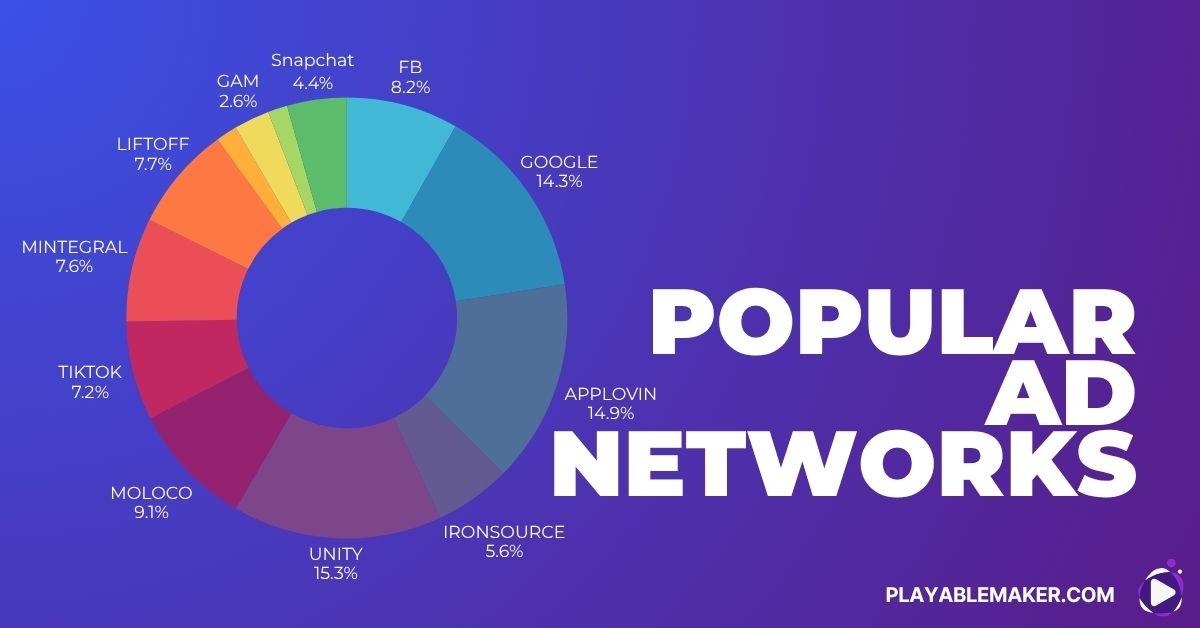
Popular Ad Networks
- Unity – 460 playables
- Applovin – 446 playables
- Google – 430 playables
- Moloco – 273 playables
- Facebook– 246 playables
- Liftoff– 230 playables
- Mintegral – 228 playables
- TikTok– 217 playables
- IronSource – 168 playables
- Snapchat – 131 playables
- Google Ad Manager – 78 playables
- RevX – 47 playables
- Remerge – 43 playables
April 2026 favorite playable creations from our customers:
- https://app.playablemaker.com/share/69dd06258988b15e465ba108
- https://app.playablemaker.com/share/69ccf717a9c8f669d93156a1
- https://app.playablemaker.com/share/69e925b865016a19bed73a72
Helping you stay 2.5 steps ahead of the games industry. Don't be too serious, except about UA.
Subscribe to my Brutally Honest newsletter!