Playable Ads Trends in Mobile Games & Apps – May 2026

Helping you stay 2.5 steps ahead of the games industry. Don't be too serious, except about UA.
Subscribe to my Brutally Honest newsletter!
As the UA landscape evolves, so do the creative trends that shape how games communicate with their audiences. With the rise of Applovin and increased spend on SDK networks, I’ve decided to bring you a monthly trends review of top-performing playable ads across different genres.
For those that read only summaries, here are playable trends May in a nutshell:
- It’s fashion time
- More and more fashion – styling playable genres to support match3 or merge games. Pick the right choices, styles and make it till the timer goes off. And than impress your boyfriend or his mother. The games behind those playables? Match3 or Merge genre in reality.
- Playrix
- Blueprint for publishing – use as much as possible from template playable, or is it killing the brand recognition? Contemplating about how clever it is to use same template for 4 different games, or whether it is going against the brand recognition.
When the playable market suddenly became stylists.
Playable ads used to be about “try before you buy” gameplay. Today, especially in May, they feel much more like “try the fantasy, we’ll worry about the actual game later.” And no fantasy is hotter right now than fashion.
My playable feed in May looked like a TikTok styling compilation:
- Dress to impress your boyfriend.
- Dress so his mom does not hate you.
- Dress for school, but don’t look cringe.
- Dress for a first date so you don’t die of embarrassment.
The flow is always the same: you get a few seconds, a small wardrobe, and a lot of social pressure. Pick outfit A or B under a timer, watch the NPCs react, repeat. The stakes are emotional, not mechanical. You’re not solving a puzzle; you’re solving your simulated social anxiety.
The punchline? Most of these “fashion” playables don’t lead to a dedicated styling game at all. They drop you into a good old match3 or merge core with a renovation / progression meta on top. The ad screams “romantic drama and outfits,” the install screen quietly says “by the way, we’re a puzzle economy game.”
This is the 2026 answer to the “fake puzzle” era. Instead of misleading pipe minigames, we now have aspirational lifestyles and relationship scenarios sitting on top of classic casual monetization. Functionally, it’s the same playbook: sell fantasy in the ad, let the game do the retention and ARPU work.
Why fashion is such a perfect skin
There are a few reasons this particular wrapper is everywhere:
- It’s infinitely remixable.
You can recycle the same underlying code while swapping only context and assets: meet his parents, meet his ex, first day at a new job, rich vs. poor glow-up, and so on. That’s the exact “build for iteration, not perfection” philosophy you push in the Playable BIBLE. - It hits a huge casual audience.
Fashion, dating, and social fame fantasies sit right in the sweet spot of casual demographics that already anchor most match3 and merge revenue. - It’s emotionally louder than “swap tiles.”
“Will my outfit humiliate me in front of his mom?” is a stronger hook than “can you clear this many tiles?” There’s a reason most high-performing playables now lean on story snippets, status change, and visible judgment instead of pure mechanics.
For UA teams, fashion is becoming a universal skin – something you can bolt onto almost any casual game, even when the core loop has nothing to do with clothes.
The core loop inside these May fashion playables
Look at your own captures: the “meet the parents,” “choose your boyfriend,” and “first date” clips all reduce to an identical skeleton:
- Show the social context in the first 1-2 seconds (boyfriend, parents, school hallway).
- Present a clear binary choice: classy vs. trashy, casual vs. overdressed, safe vs. risky.
- Add a timer or pressure meter so players feel they have to decide quickly.
- Overreact with animations and VO: either huge success or huge cringe.
- Place an obvious CTA right at the emotional peak.
This is textbook best practice: fast hook, simplified input (tap/tap), emotional payoff, then “Play now.” What’s new is the way the emotional payoff is framed. Failure isn’t “level failed”; it’s “your boyfriend is ashamed of you” or “his mom now hates you.”
For a casual player already primed by social apps, that hits harder than losing a puzzle. It taps into the same micro-dramas that make short-form video bingeable.
The expectation gap risk
Of course, once you push this far into fantasy, you’re flirting with the “fake ad” line again. You’ve written before that fake concepts can still work if they are directionally aligned with the actual game and you treat them as glorified creative hypotheses. The May fashion trend stretches that philosophy.
Potential downsides:
- Short-term KPIs vs. long-term trust.
You’ll probably win on CTR and CVR if your playable feels like a Netflix teen drama. But if you send users into 3000 levels of tile matching with only a thin fashion meta, your D1, D7, and pay rates will tell you exactly how big the expectation gap is. - Store and in-game alignment.
If your app store screenshots, icon, and first-time user experience don’t echo the fashion angle at all, you’ve effectively run an ad for a different game. Your own UA guides keep repeating: creative fantasy and store fantasy must at least rhyme.
The interesting part is that players don’t seem to punish this as hard as theory would suggest-yet. The market has been trained for years by “fake puzzle” ads, survival dramas for city builders, and IQ tests for 4X. May’s fashion boom is just the latest iteration of “our playable sells the fantasy, not the spreadsheet.”
How to steal this trend without burning your brand
If you want to copy the “It’s fashion time” trend without tanking retention, there are a few design guardrails:
- Make fashion real in the game, not just the ad.
You don’t need a full dressing meta, but you should at least keep outfits and character customization visible in the early FTUE and first sessions. Even basic avatar choices already help close the gap. - Keep the emotional tone consistent.
If your playable is dramatic and soapy, but the game is chill, cozy gardening, the emotional whiplash will crush your second session. Align the tone: funny, cringe, cozy, stressful—pick one and keep it across ad → store → tutorial. - Use the template mindset.
Build one robust fashion-choice template with plug‑and‑play slots for text, outfits, and consequences. Then iterate 20 times. That’s the same template strategy that worked for puzzle, sort, and scratch playables in our 2025-26 reports.
In other words: fashion playables are not a new genre; they’re a composable skin you should add to your creative stack, as long as your game can support at least a hint of that fantasy after the install.
Playrix’s Blueprint Playable: Genius Template or Brand Dilution?

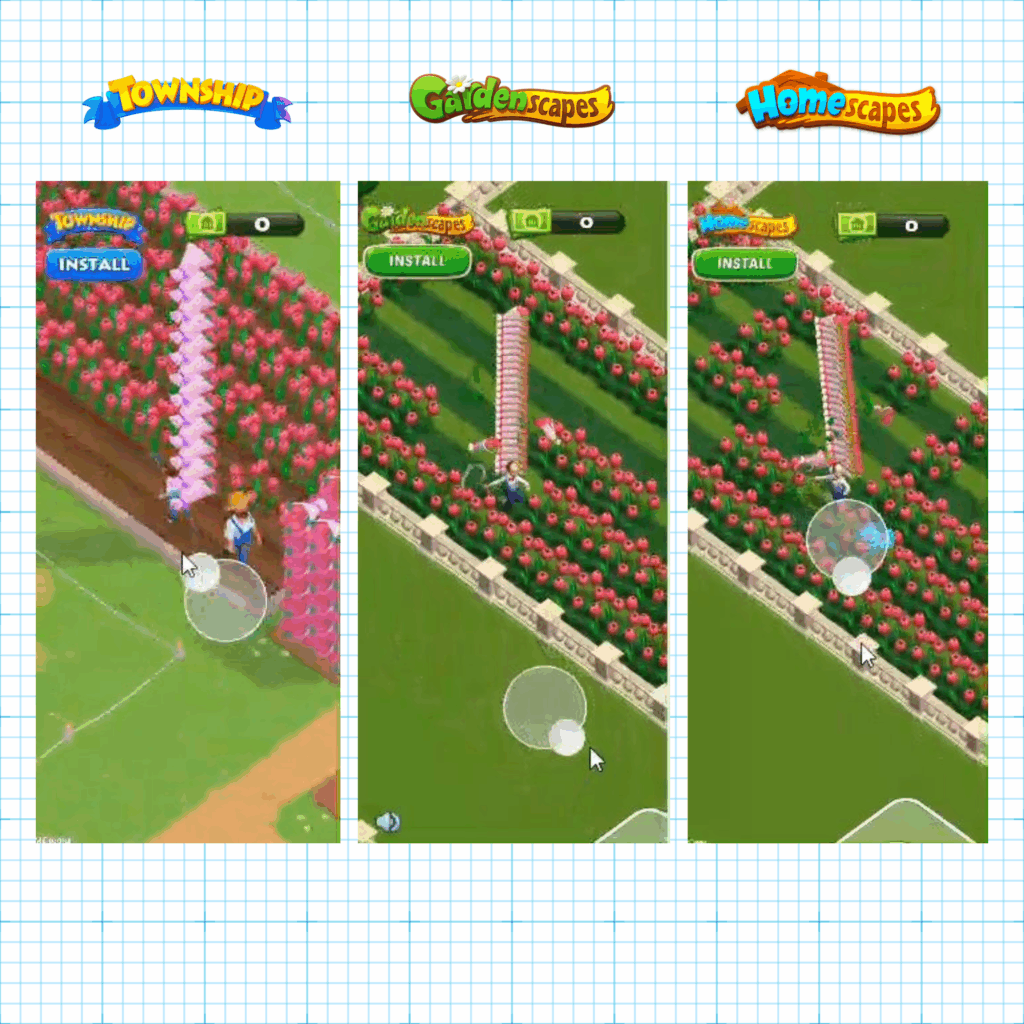
The second big May story lives in your video folder: four Playrix titles-Township, Fishdom, Gardenscapes, Homescapes-all effectively running the same playable skeleton with a different coat of paint.
We’ve talked for years about “template playables” and the power of one universal layout reskinned for multiple audiences. Playrix is doing this at industrial scale.
Look at the footage:
- Camera and board framing are almost identical.
- Tutorial affordances and arrows live in the same spots.
- The timer or move counter is in the same corner.
- The CTA appears at the same emotional moment and position.
If you stripped away logos and characters, an average user would probably just say “this is a Playrix game.” In other words, they’ve built a blueprint playable-a master template that can sell four different IPs at once.
Why this template strategy is brilliant
From a UA and production standpoint, this is exactly how playables should be treated in 2026:
- Production velocity and cost.
Building high-quality interactive creatives is still significantly more expensive than cutting raw video. Once you have a stable template, cloning it for another title is almost free compared to starting from scratch. - Proven interaction pattern.
You don’t have to rediscover the wheel every time. If you know that a certain level structure, forced-fail moment, or win-state CTA boosts conversion by 30–60% in one game, it’s a good bet the pattern will work in a sibling title with similar audience and monetization. - Cross‑title learning loop.
You can run experiments in one game and import winners to others. That turns your creative pipeline into a network, not a series of silos.
Minigame for you: Guess which one is Township, Gardenscapes and Homescapes
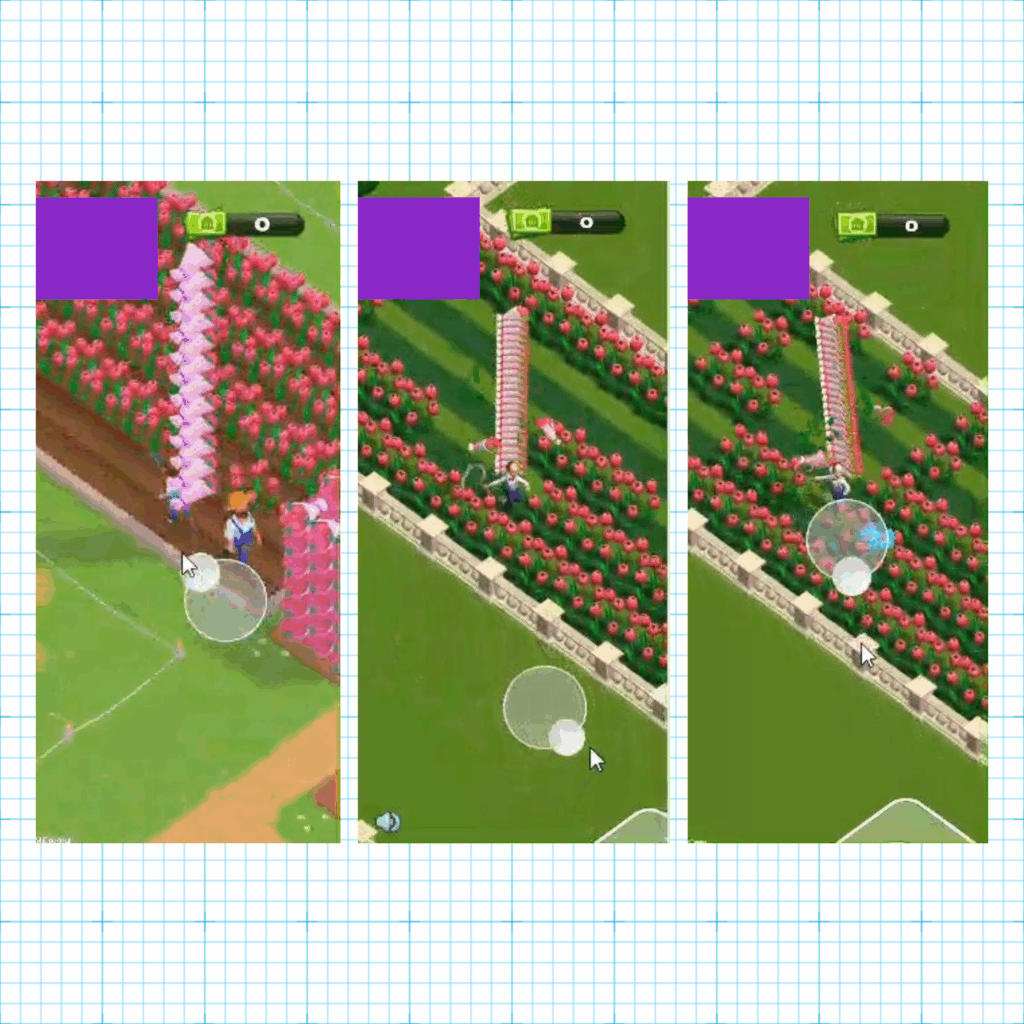
Drumroll…
Where the blueprint can hurt: brand recognition and IP clarity
But there’s a tradeoff-the moment your template is too strong, it can start eating your brands.
Township, Fishdom, Gardenscapes, and Homescapes should occupy different mental slots:
- Township: light city-building and resource loops.
- Fishdom: aquarium and match3.
- Gardenscapes: garden renovation & story.
- Homescapes: home renovation & story.
If all four are sold through almost identical top-down playable layouts with similar HUD and interactions, users may start to see them not as distinct games, but as “more levels” of the same meta-Playrix experience. That’s efficient in the short term, but it risks:
- Confusing creative performance data.
If users can barely distinguish the fantasy in the ad, you might end up optimizing toward the “Playrix blob” rather than understanding what actually sells Township vs. Fishdom. - Cannibalizing cross‑promotion.
When one IP’s ads look interchangeable with another’s, you lose some of the upside of having multiple strong brands. It’s harder to justify running all of them aggressively in the same auctions if they recruit similar players into slightly different ecosystems. - Weakening long-term positioning.
In the fight against Royal Match, Candy Crush, and other giants, you probably want your IPs to feel distinct. A single master playable template pushes in the opposite direction.
This isn’t an argument against templates; it’s a warning about letting the template dominate the IP.
Template blueprints done right: some rules of thumb
So how do you steal Playrix’s blueprint strategy without waking up in 2 years with one blurry brand?
- One universal skeleton, multiple emotional wrappers.
Keep things like input method, camera framing, and CTA logic identical. Change the emotional promise: survival vs. cozy renovation vs. fashion vs. power fantasy. - Non‑negotiable IP anchors inside the template.
Each title needs at least one strong, non‑removable identity anchor in the playable: signature character, art style, or key mechanic. This is the “Cats vs. Dogs vs. Solitaire vs. Pixels” differentiation we were already highlighting in 2025-26 trend posts. - Enforce visual guardrails, not identical UI.
Set global rules (e.g., minimum font sizes, button shapes), but let colors, typography, and iconography reflect each brand so players can tell them apart at a glance. - Measure cross‑brand confusion on purpose.
Watch install and retention overlap between titles that share the same template. If too many players are bouncing between them without sticking, your blueprint may be over‑homogenizing your audience.
In short: your goal is “recognizable template, recognizable game.” The user should think “ah, a [your studio] playable” and “oh, this specific title” at the same time.
How May Fits Into the Bigger Playable Story
Zooming out, May’s two main trends-fashion skins on everything and Playrix’s hardcore template strategy-both point to the same long-term shift you’ve documented for a while: playables are no longer a cute side format; they’re the backbone of serious UA.
A few macro data points back this up:
- Global daily volume of playable ad creatives crossed 30k in 2024 and keeps climbing.
- Over half of top mobile game publishers already treat playables as a core tactic, not an experiment.
- Casual and arcade titles still dominate playable volume, but mid‑core and 4X are aggressively adopting side-game playables as onboarding funnels.
In that world, it’s natural that:
- Teams look for skins (fashion, family drama, survival) that can be slapped onto multiple genres.
- Big publishers converge on internal blueprints so they can ship and iterate faster than smaller competitors.
The danger, ironically, is success. When the pressure to scale creative volume meets the ease of templates and the proven power of fantasy-first hooks, we drift closer to the gray zone between “clever creative” and “fake ad.”
The best UA teams will do what you keep preaching:
- Use fantasy to get attention.
- Use template playables to scale and learn.
- But keep the promise of the ad connected to the soul of the game, so you’re not just renting installs—you’re buying long-term players.

Data from PlayableMaker – what is being created?
Our friends at PlayableMaker have shared their latest data and insights for May 2026, revealing trends in templates, game mechanics and ad network usage. Here’s a quick summary:
Did you know that you can now vibecode your playables? Here are some examples we liked last week:
New Popular Templates for May 2026
- Merge 3 Pirates: Merge 3 of the same items to unlock more.
- Crowd Runner: A 3D Crowd Runner game mechanics.
- Escaping Arrows Sort: Click and sort the arrows to win the game.
- Drag Drop Dress Character: Pick the right armor for your character
- Fix The Car: Tap the right places to fix the whole car
- Snake 3D: Eat your opponents or die trying
- Idle Football Match: Manage your team for the win

Playable Maker modules – which ones are used the most?
- Builder Templates (44,9%)
- Video Playables (43,3%)
- Vibe Coding (11,8%)
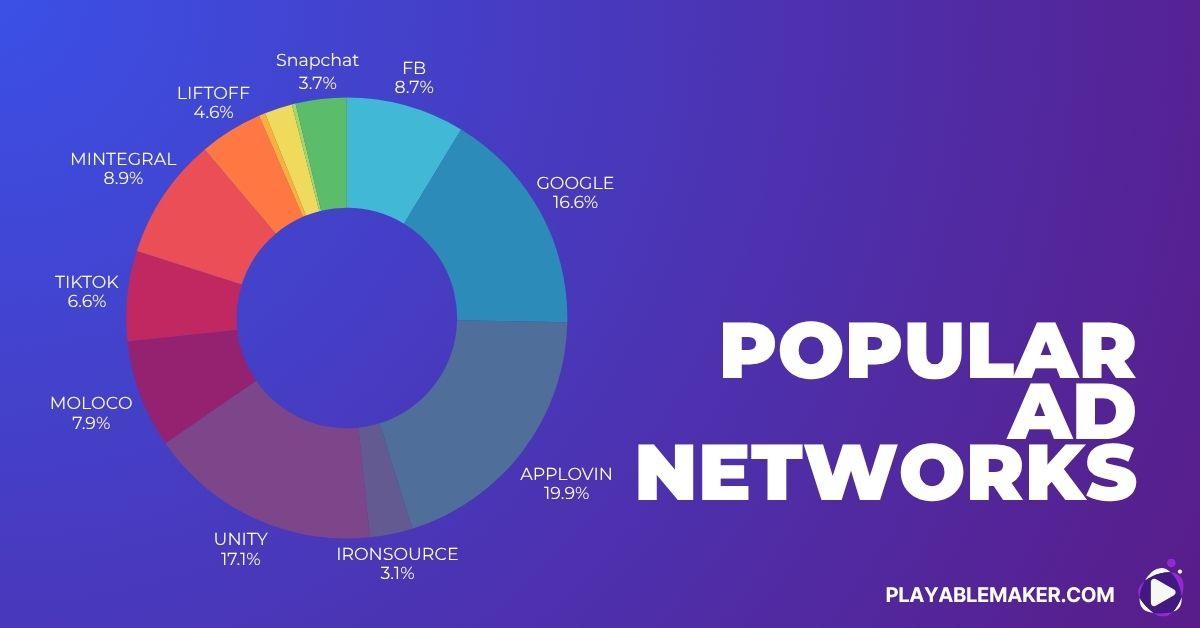
Popular Ad Networks
- Applovin – 714 playables
- Unity – 612 playables
- Google – 597 playables
- Mintegral – 321 playables
- Facebook– 311 playables
- Moloco – 284 playables
- TikTok– 237 playables
- Liftoff– 166playables
- Snapchat – 134 playables
- IronSource – 112 playables
- Google Ad Manager – 73 playables
- RevX – 17 playables
- Remerge – 10 playables
May 2026 favorite playable creations from our customers:
- https://app.playablemaker.com/share/6a0c6b4a65016a19bedf6b93
- https://app.playablemaker.com/share/6a17fee965016a19bee22733
- https://app.playablemaker.com/share/6a18a41f65016a19bee25f9c
Helping you stay 2.5 steps ahead of the games industry. Don't be too serious, except about UA.
Subscribe to my Brutally Honest newsletter!